
Furnaces: Your Home's Winter Lifeline
Heating systems are vital in keeping you and your family comfortable, and DG Heating and Cooling knows and understands the harsh, cold winters of Racine and Kenosha, Wisconsin. We are here to answer the call, whether your question is "Got Heat?" or the urgent realization of, "Oh no, I have no heat!"
When the cold strikes, you need comprehensive, local support for your home furnace. We specialize in professional Racine and Kenosha HVAC services, covering every need from expert HVAC maintenance local homeowners rely on to ensure maximum efficiency, to emergency repairs and complete furnace replacement. You can count on our certified technicians for the best heating solutions. You can stop searching for "reliable heating near me.” Our team provides fast, experienced service to keep your family warm and comfortable all year round.
Homeowner's Essential Furnace Checklist

Knowing the basics of your heating system and taking proactive steps can save you time, money, and hassle during a cold snap. Here are a few essential things every homeowner should know about their home furnace and heating system:
- Know Your System Type: Be aware of whether your home uses a forced air furnace (which heats air and pushes it through ducts) or a boiler (which heats water for radiators or radiant systems). This information is crucial for service calls.
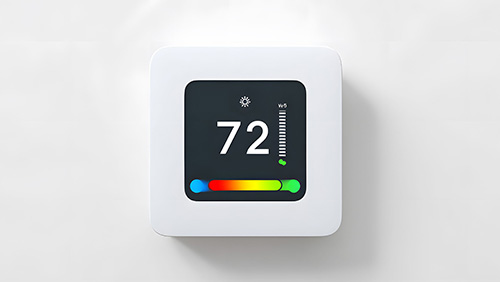
- Thermostat Battery Awareness: Know how to properly replace the batteries in your thermostat if it's battery-powered. Some modern units are hardwired directly to the furnace and won't need batteries, but it's important to confirm the type you have.
- Filter Maintenance: Make sure you know how to change your furnace filters and do so regularly. A dirty filter is one of the leading causes of system inefficiency and breakdown.
- Understand HVAC Accessories: Take the time to understand the operation of any installed HVAC accessories, such as a humidifier, to ensure they are working correctly and not negatively impacting your furnace.
- Call Immediately If You Lose Heat: If your heat is not working, do not wait, thinking the problem will fix itself. The longer you delay calling for service, the longer you will wait for heat, and you may risk incurring higher after-hours charges.
- When in Doubt, Schedule a Call: If you're unsure about any aspect of your heating system's operation or maintenance, the safest step is to schedule a call with DG Heating and Cooling!
How Your Furnace Works: A Step-by-Step Guide
While a quality furnace is built for reliability, understanding how it operates can help you monitor its performance and recognize potential issues quickly. Here is a detailed look at the simple concept behind a sophisticated heating system:
The Heating Cycle (6 Steps)
- Initiation: When the temperature in your home drops below the setting on your thermostat, the furnace is signaled to start its heating cycle.
- Fuel Flow & Ignition: Natural gas or propane is piped from outside the home into the furnace. A special valve inside the furnace directs the flow of gas into a burner, where it is ignited to start a controlled flame.
- Heat Exchange: Heat from the burning fuel enters a narrow chamber called a heat exchanger. Cold air from your home flows across the outer surface of the heat exchanger and absorbs the heat.
- Air Circulation: The resulting warm air is circulated out to your living spaces by the furnace blower through a series of "supply" ducts inside your walls, ceilings, or floors.
- Recirculation: The heating process continues as cooler indoor air re-circulates back to the furnace through a different series of “return air” ducts.
- Cycle Completion: The thermostat shuts off the flow of warm air once it detects that the temperature has reached the set level. When the indoor temperature falls below the thermostat’s setting, the furnace turns back on and starts heating your home again.
Major Parts of a Furnace System
|
Today’s gas furnaces can include sophisticated technology and quite a few parts working in coordination. Here’s a closer look at the major components that make up your heating system: Thermostat - Though not inside the cabinet, this is an important part of your system. It controls furnace operation and is where you set the temperature you want for your home. Burners - The burner is typically a hollow tube with several small holes. Natural gas or propane flows through the holes so it can be ignited to create a controlled flame. Ignitor / Ignition Switch - Today’s furnaces typically include some sort of spark or hot surface ignitor. Older models used a pilot light ignition, which was less reliable and used more gas. Control Board - The control board coordinates furnace operation. Higher-end control boards monitor conditions, maintain operation history, and manage furnace usage for higher energy efficiency and comfort. Blower - Forced air gas furnaces include a blower that circulates air through your home, into your furnace, and back out to your home. Heat Exchanger - This component transfers heat from the combustion gases to the air passing over it. Flue gases, including carbon monoxide, are contained within the heat exchanger and vented safely outside. Gas Valve - The gas valve receives gas from an external source and controls the flow of gas within the furnace. Air Filter - Most furnaces include some type of air filter to help keep indoor air fresher, furnace components cleaner, and the system running at its best. |
  |
Recommended Ruud Furnace Models
U98MV Endeavor® Line Ultra® Gas Furnace
|
R962V Endeavor® Line Achiever Plus® Gas Furnace
|
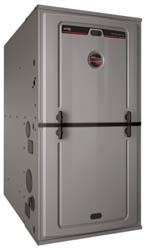
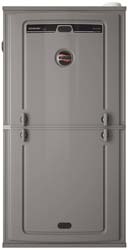
R951V Endeavor® Line Achiever® Gas Furnace
|
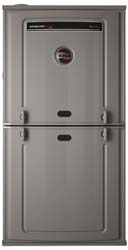
R801T UH Endeavor® Line Achiever® Gas Furnace
|
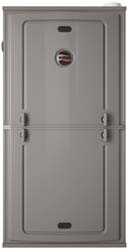
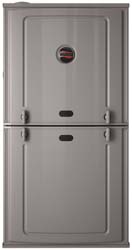
R802V UH Endeavor® Achiever Plus® Gas Furnace
|
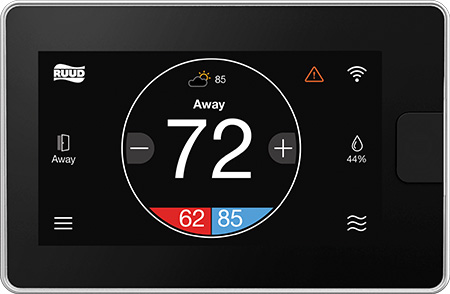
Most Models Are EcoNet Thermostat-Enabled |
Choosing the Right Furnace: Efficiency and Types

Gas furnaces come in many varieties, from the very simple to the very complex. Understanding the different options, particularly their efficiency ratings, is key to choosing the best fit for your home and budget.
Fuel Sources
Furnaces are defined first by the fuel they use:
- Natural Gas - Utilizes natural gas delivered directly from your local utility provider.
- Propane - Uses propane stored in a tank located outside your home.
Efficiency and Operation
Furnace efficiency is measured by its Annual Fuel Utilization Efficiency (AFUE) rating, which tells you what percentage of fuel is converted into useful heat.
Conventional Gas Furnaces (Standard Efficiency):
- Typically meet minimum efficiency standards (around 80% AFUE).
- Require a traditional metal flue vent.
- Have an “open” combustion chamber that draws air from within the home.
High-Efficiency Gas Furnaces (Condensing):
- Feature an efficiency of 90% AFUE or greater.
- Typically includes a sealed combustion system that draws air from outside for combustion.
- Vent through PVC piping instead of a traditional flue.
- They are often Condensing Furnaces (see below).
Heat Exchanger Configuration
The type of heat exchanger relates directly to the furnace’s efficiency:
- Non-Condensing Furnaces - These are lower-efficiency furnaces that have only one heat exchanger.
- Condensing Furnaces - These are higher-efficiency (90%+ AFUE) furnaces that include a primary heat exchanger and a secondary (condensing) heat exchanger to capture even more heat from the combustion gases.
Capacity and Comfort Control
Modulating Gas Furnaces
These advanced furnaces have the ability to adjust their heating capacity up or down in stages as needed. This allows the system to precisely match changing conditions, providing more consistent temperatures, greater comfort, and maximized energy savings.
The DG Heating & Cooling Difference: Ruud Furnace Installation Benefits
As a dedicated Ruud Pro Partner, DG Heating and Cooling is certified to install, service, and repair Ruud's industry-leading equipment. When you choose us for your new furnace replacement, you are choosing quality products backed by expert installation, ensuring you receive these top-tier benefits:
- Peace-Of-Mind Performance! Ruud systems are renowned for their reliability. Combined with our professional, certified installation, you can rest assured your system will perform flawlessly throughout the coldest Wisconsin winters.
- Quieter Operation! Modern Ruud furnaces, especially variable-speed and modulating models, are engineered for ultra-quiet operation, allowing you to enjoy consistent heat without disruptive noise.
- Energy Efficiency Savings! We install high-efficiency Ruud models that maximize the fuel converted into heat (high AFUE ratings), leading directly to noticeable energy efficiency savings on your monthly utility bills.
- Excellent Comfort! These advanced systems deliver consistent, even heat throughout your entire home, eliminating hot and cold spots to provide truly excellent comfort for your family.
For quality furnace installation or repair services throughout Racine and Kenosha, trust DG Heating and Cooling!